Thinking together
27 Jul 2026
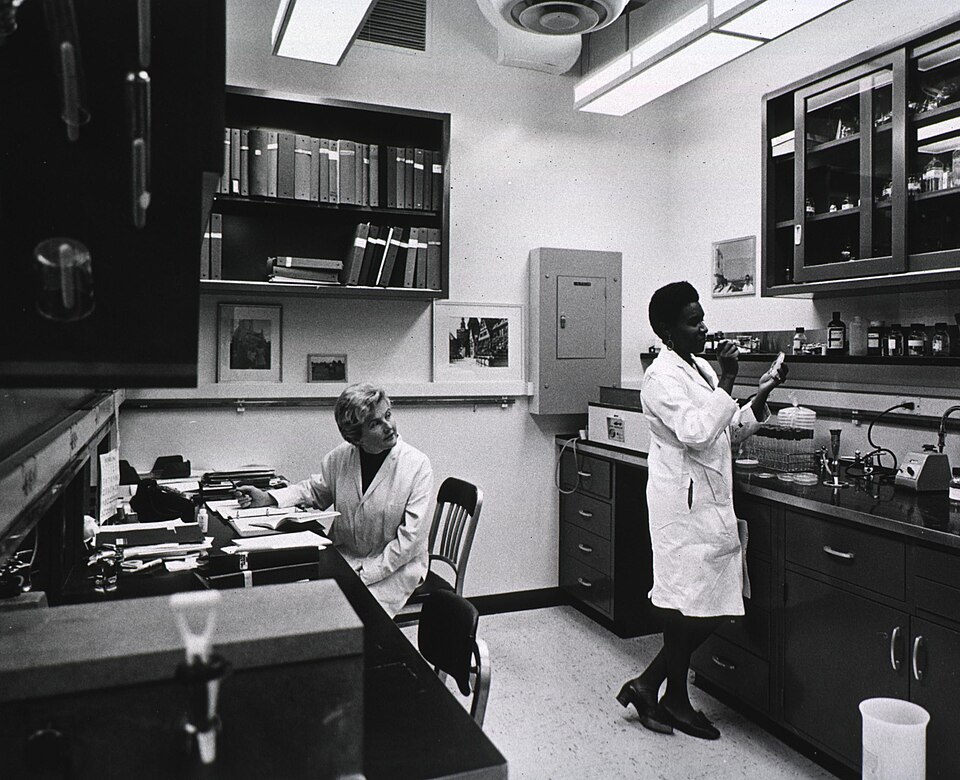
Our best ideas have come from people talking to each other. Greek philosophers debating in public. Scientists arguing at lab meetings: when Kevin Dunbar recorded molecular biology labs in real time, he found that breakthroughs happened at the weekly meeting, not alone at the bench. Programmers pairing at one keyboard. Across 20 million papers over five decades, teams increasingly produce the most-cited work in virtually every field. Kahneman said of his work with Tversky that they had "a joint mind that was better than our separate minds". The collaborative layer between humans, running alongside our work with machines, has produced the ideas that have stood the test of time.

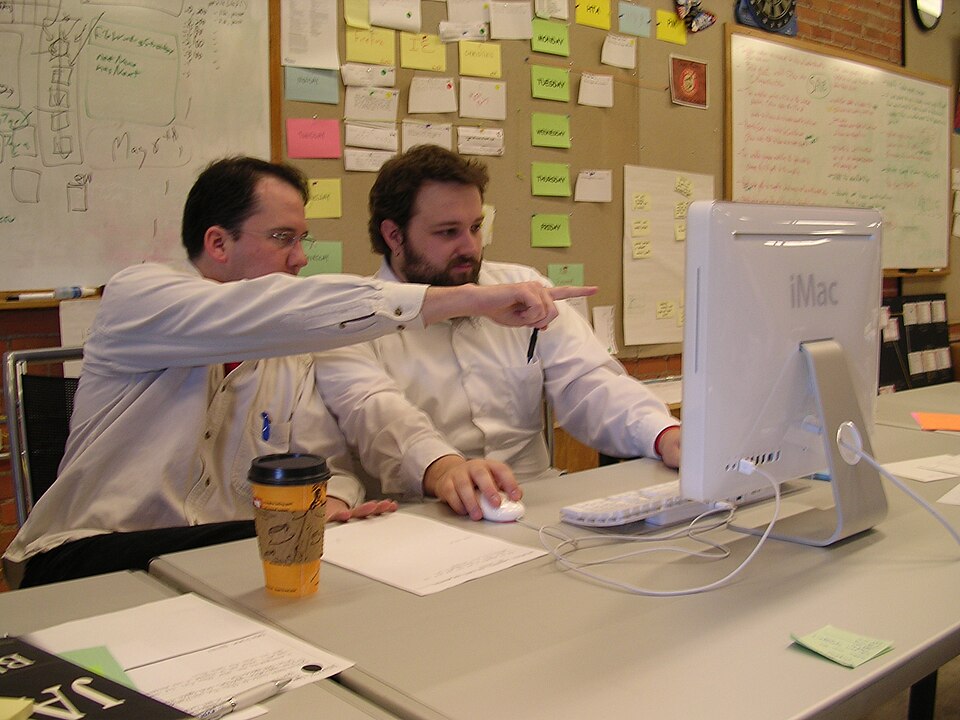

The honest counterargument: plenty of great things were built in isolation, and brainstorming groups reliably produce fewer ideas than the same people working alone. But look closer and the pattern holds. What fails is polite group ritual: groups told to debate and criticize outperform classic brainstorming, and the winning structure is generating alone, then selecting and framing together. Even Wozniak, the favorite example of the lone builder, got the idea at the Homebrew Computer Club. The solitude was for execution. The framing, the debates, the "wait, that can't be right" moments happened with other people.
Software is where the smart people went. And building software has been on a trajectory toward isolation for years. AI is accelerating it: even back when AI meant autocomplete, developers with Copilot access shifted toward autonomous rather than collaborative work, and within months of ChatGPT's release, Stack Overflow activity fell by a quarter as public developer dialogue moved into private AI chats. Coding agents take this further: what was a conversation in public is now a private session, one human and one model at a time. You now talk to agents for research and for implementation. For implementation, fine. For research and ideation, these turn-by-turn interactions feel unnatural to me. The best ideas I have in this interaction model arrive right after I press enter on my initial prompt. The French have a name for this: l'esprit de l'escalier, the perfect reply that arrives on the staircase after the conversation. The research calls it incubation: ideas reliably show up right after deliberate effort stops.
Collaboration is a lever
One of the most important features of access to capital is the ability to attract top thinking minds. Capital solves the discovery problem for humans. Once you have found them, it is a disservice not to be able to collaborate with them.
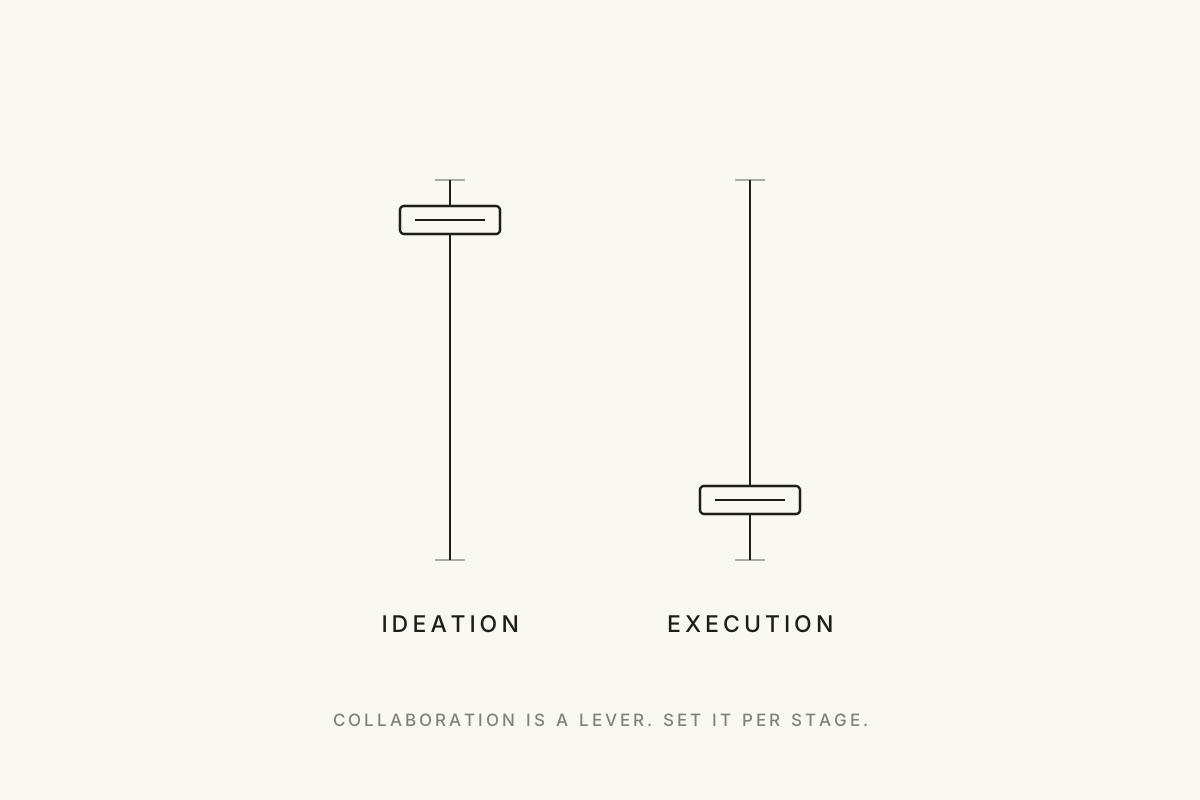
Collaboration always costs efficiency. During goal setting, that inefficiency is a feature: friction and dissent are exactly what make groups generate better ideas. Think of collaboration as a lever you set differently at each stage of building a product. But you need tools to set it, and the more isolated our workflows become, the harder that gets.
Pair prompting
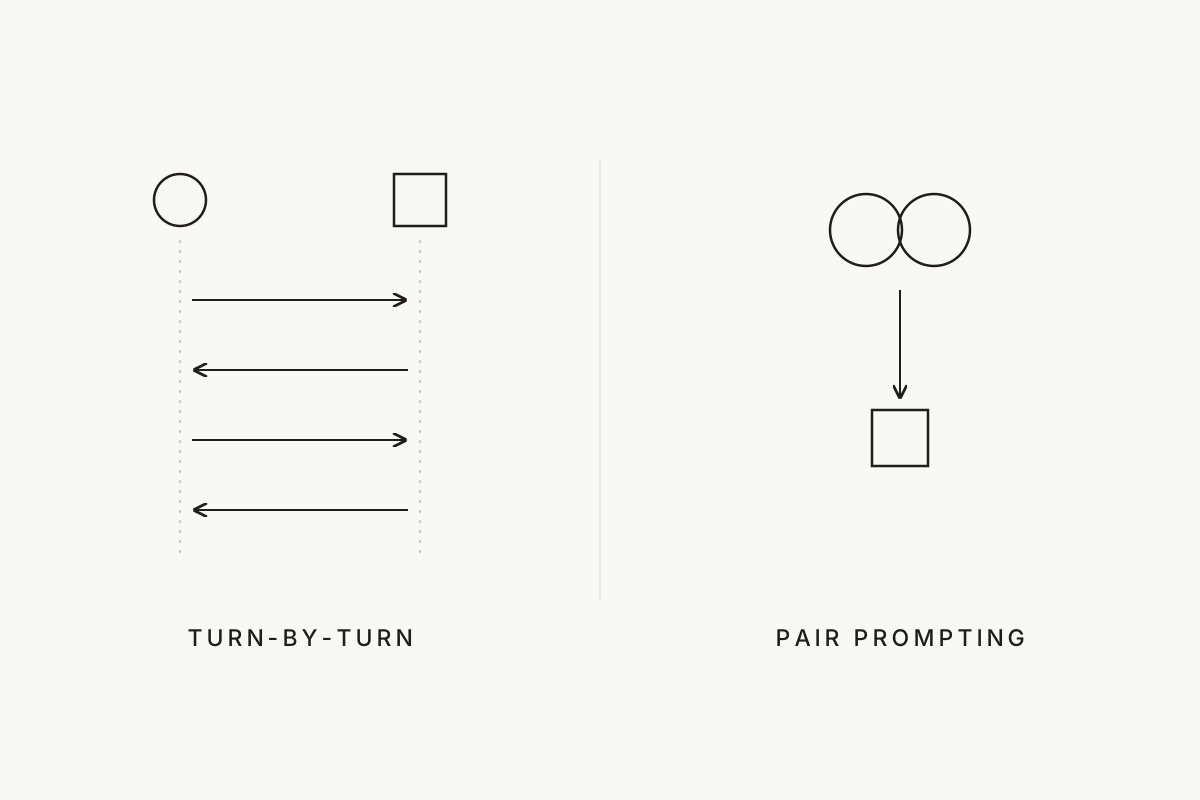
This started as a play on pair programming, but the more I think about it, the more merit it has. The obvious version is a Google-Docs-style multi-cursor input box. That is not what I mean. What I mean is a way to talk with another person while prompting the model. Kleist wrote in 1805 that the idea comes while speaking: when brooding fails, talk to whoever is at hand and the mind completes the thought under the pressure of having begun the sentence. Programmers know a degenerate version of this as rubber duck debugging.
Turn-by-turn interaction during ideation is the equivalent of publishing a document, waiting for a reviewer to review it, then making updates. It is a review cycle, not a conversation. Review cycles are how you refine an idea. Conversation is how you find one. The HCI research is starting to say the same thing: linear chat imposes a heavy interactional load for exploratory work, and people who ideate through a chatbot produce less diverse ideas and feel less ownership of them.
This is not to say individual moments of genius do not exist, just that all of our tools already work for those.
The shift
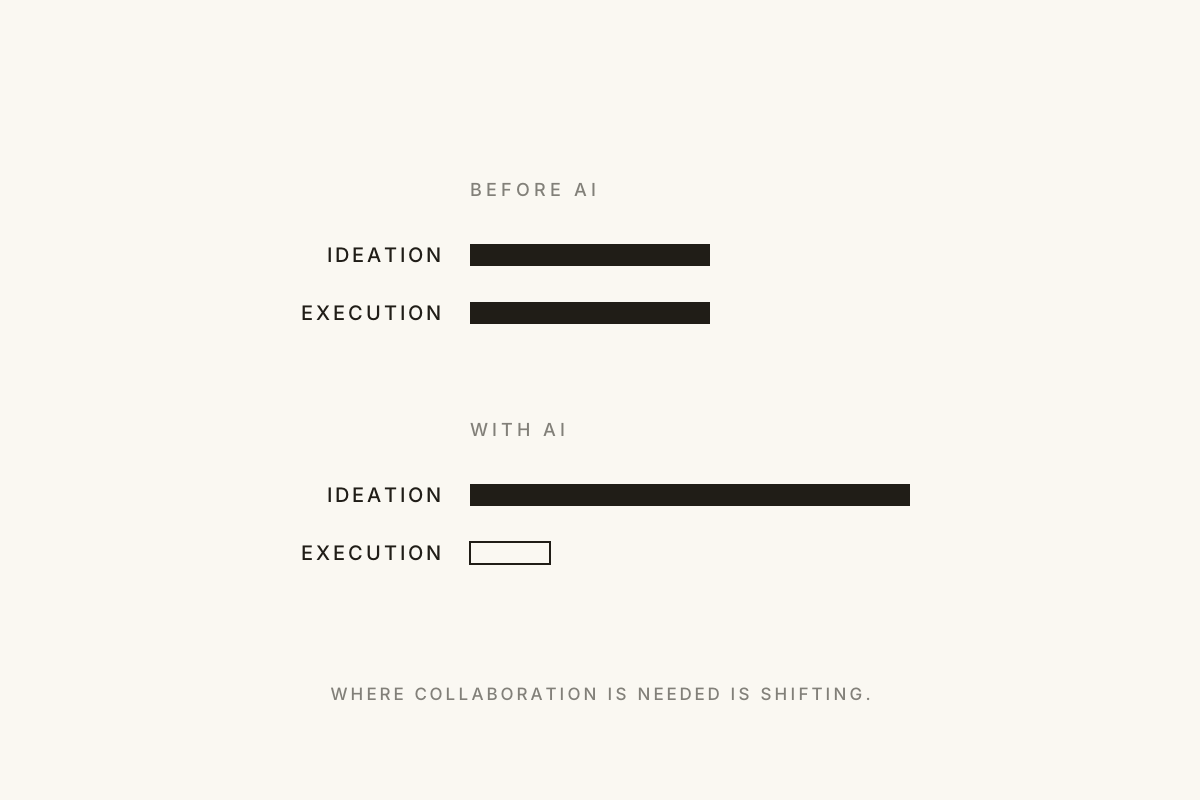
The need for collaboration is shifting: less during execution, more during ideation. Agents absorb the execution. What remains is deciding what to build, and that is exactly the part we are worst equipped to do together. This is why the interaction models from Thinking Machines keep me waiting. They call turn-based chat a "collaboration bottleneck" and are building models that perceive and respond continuously instead of alternating turns. But note what they are attacking: the turn-taking between one human and the model. The layer where multiple humans think together while working with a model is still unclaimed.
What would tools for this look like? Maybe a real-time transcriber and summarizer sitting on a call, with a "submit to agent" button. Maybe a multi-party chat that does not treat every message as a prompt, but waits for the discussion between humans to finish and picks up the whole thing as one prompt. A single input box that many people can edit would definitely be too chaotic. Early experiments point the same way: LLMs helped group ideation when embedded in the group's own structure, not when sitting in a side chat.
Our tools already serve the lone genius. We should build the ones that let us think together.